
01
Risk moves faster than governance
Depegs and oracle failures happen in minutes. By the time a proposal passes, the loss is already booked.
Solutions / DeFi Vaults
Newton is the verifiable policy enforcement layer for DeFi vault risk management: your security, compliance, and market risk policies enforced on every transaction before funds move, with proof onchain.

Why enforcement
They come from rules that exist on paper but aren't enforced at the moment they matter: when a transaction settles.
01
Depegs and oracle failures happen in minutes. By the time a proposal passes, the loss is already booked.

02
Concentration and drawdown caps that nothing checks at settlement are limits in name only.

03
Institutional capital stays out when policies are asserted rather than proven. Allocators want proof instead of promises.
What Newton enforces
Enforced on every transaction before it settles, not audited after the fact. Start from templates built on named providers: Chainalysis screening, RedStone market data, Persona identity. Or compose your own in Rego, deterministic and reviewable.

Depeg detection
Depeg detection
Pause or block activity when a referenced asset breaks its peg beyond a set threshold.

Max drawdown
Max drawdown
Halt deposits or withdrawals when losses cross a defined limit.

Concentration limits
Concentration limits
Keep any single asset, counterparty, or market within its allocated share.

Oracle divergence
Oracle divergence
Reject transactions when price feeds disagree beyond tolerance.

Investor eligibility
Investor eligibility
Restrict access to depositors who meet identity and jurisdiction rules.

Counterparty screening
Counterparty screening
Screen contracts and addresses against sanctions and risk lists before interaction.
How it works
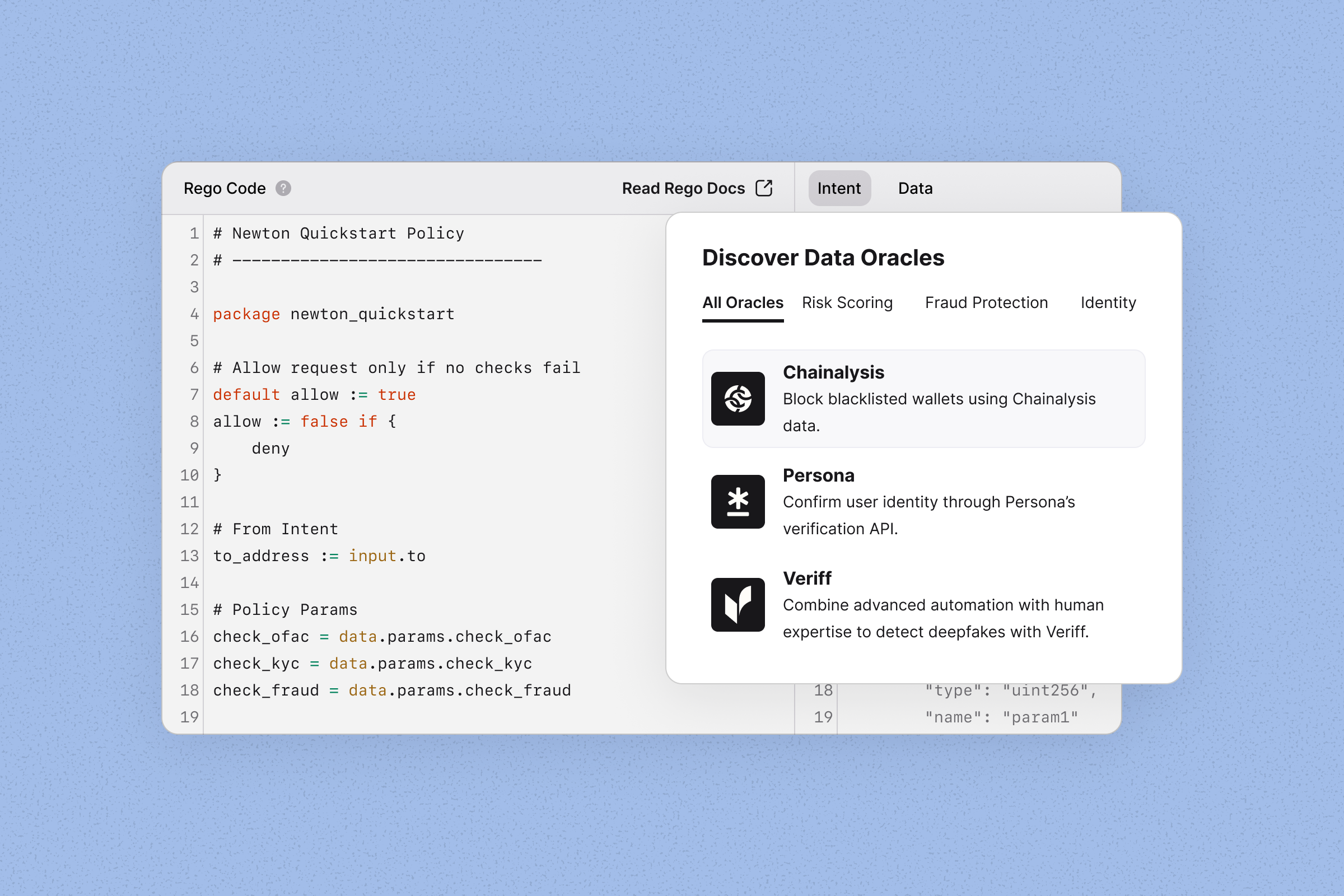
1. Write or select a policy
Start from a vault policy template or write your own in Rego, using onchain and offchain signals: peg data, oracle feeds, position limits, sanctions.
Verifiable by design
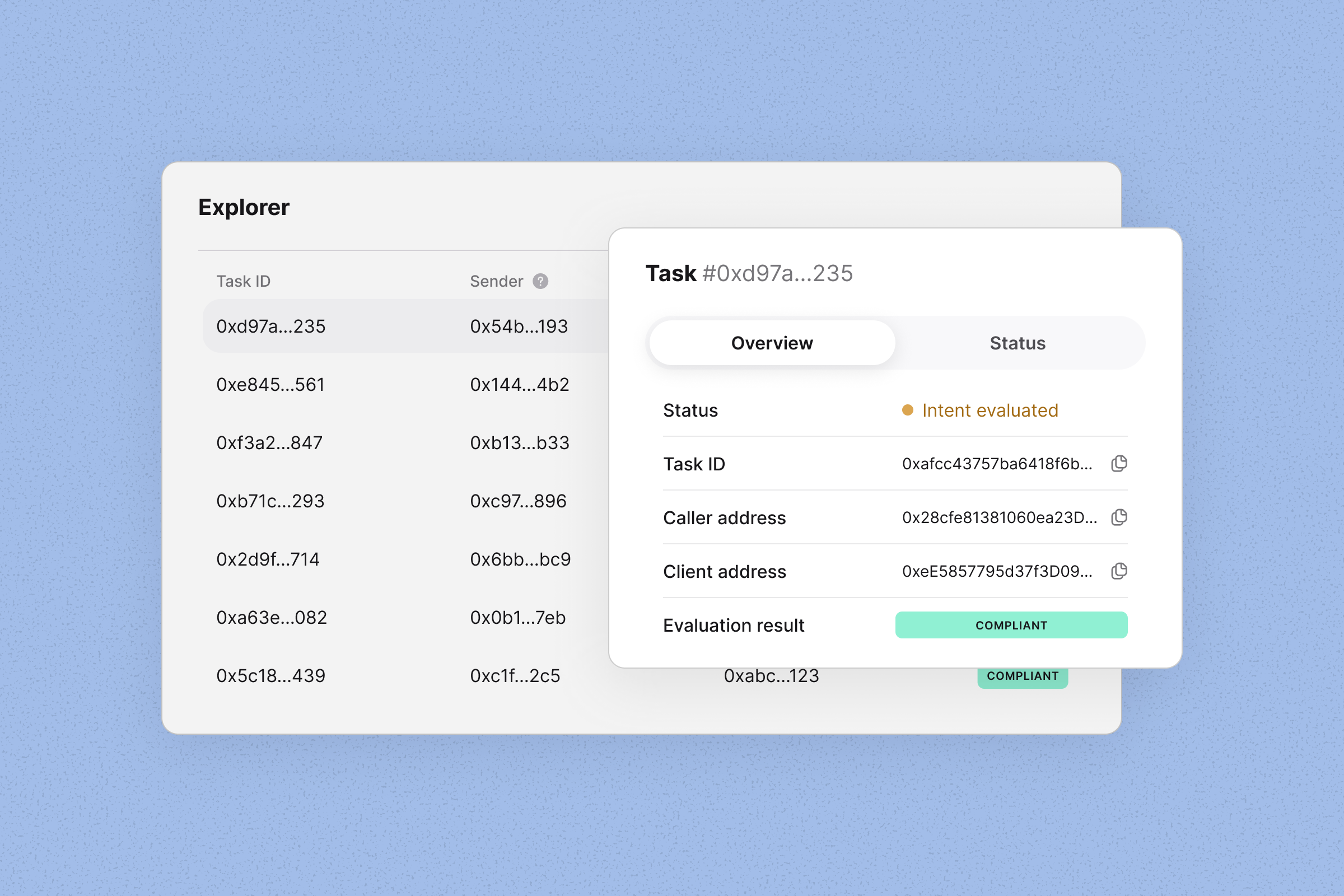
Approved or blocked, each enforcement decision is recorded onchain and verifiable by anyone on the Newton Explorer. No single vendor in control, nothing to take on trust. Policy versions are themselves permanent onchain attestations, and a per-curator transparency dashboard gives you a live enforcement record to share with LPs.
Task #0xd97a...235
Status
Task ID
0xafcc43757ba6418f6b...
Caller address
0x28cfe81381060ea23D...
Client address
0xeE5857795d37f3D093...
Evaluation result
DeFi Vault Risk Management
Verifiable policy enforcement means a vault's rules, eligibility, exposure limits, screening, and mandate guardrails, are checked on every transaction before settlement, and every check produces an onchain attestation anyone can verify. It closes the gap between the policies a curator promises and what actually executes: proof instead of promises.
FAQ
Monitoring flags a violation after funds move. Newton evaluates each transaction against the vault's policies before settlement, so a transaction that fails policy never executes. The result is a prevented breach and a signed receipt, not an alert.
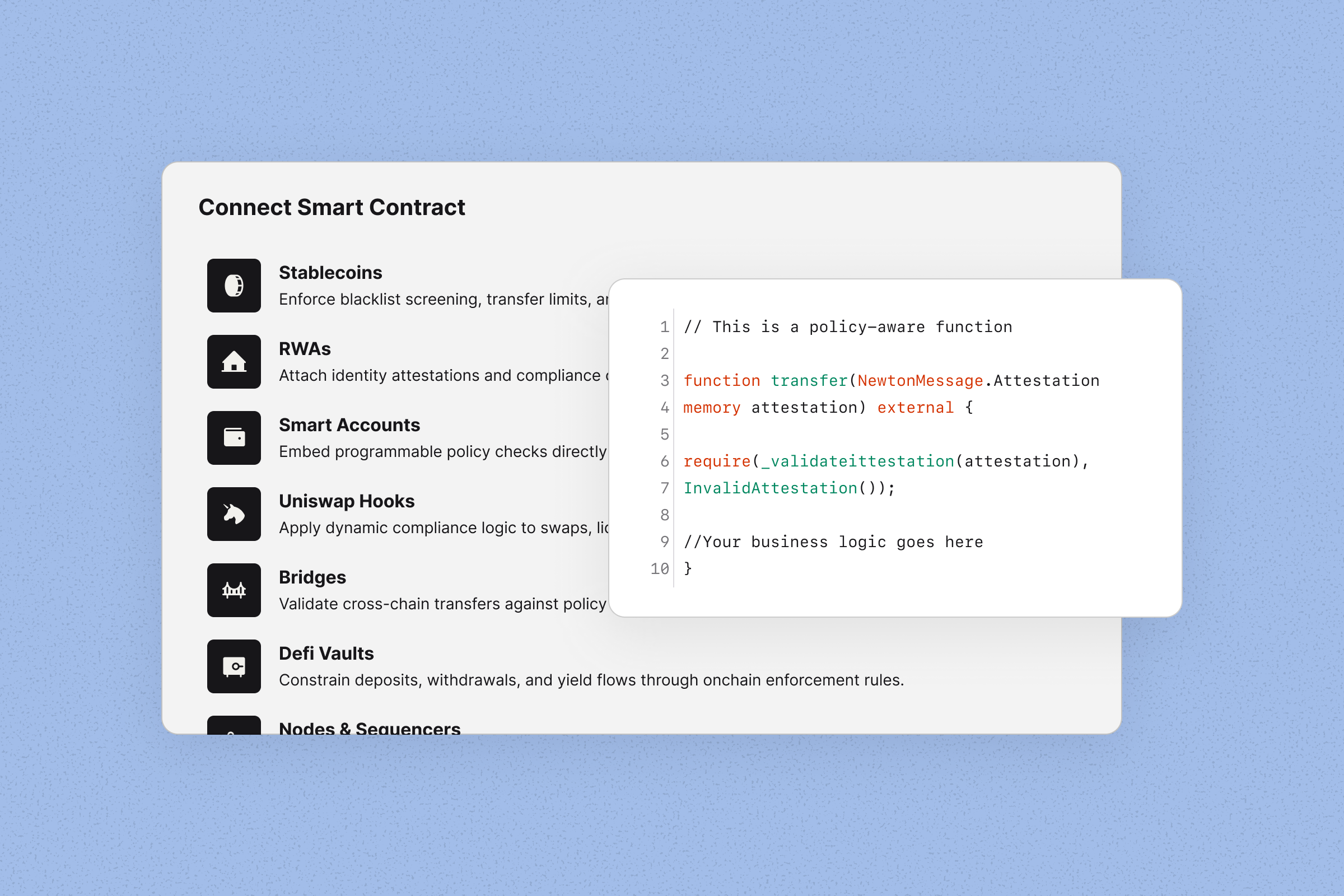
No. Live vaults can use Newton Shield, which enforces policies in front of the wallet with no contract change, no redeploy, and no new audit. New vaults can build the policy client in from day one, with support for Morpho Gates and Hooks, Veda Hooks, and any ERC-4626 vault.
Every evaluation is attested onchain and checkable by anyone on the Newton Explorer. Policy versions are permanent onchain attestations, and each curator gets a transparency dashboard to share with LPs and risk committees.
Policies evaluate onchain and offchain data at evaluation time: Chainalysis screening, Persona identity, RedStone market data, plus your own signals. Private inputs stay private: providers return only the evaluation result, with TEEs where raw data must resolve.
Evaluation runs in under two seconds on every integration path.
Go deeper
Guide
A case study of how a stablecoin depeg can drain a vault, and how enforcement before settlement contains it.
Docs
Policy client, Newton Shield, and the vault types Newton enforces on.
Protocol
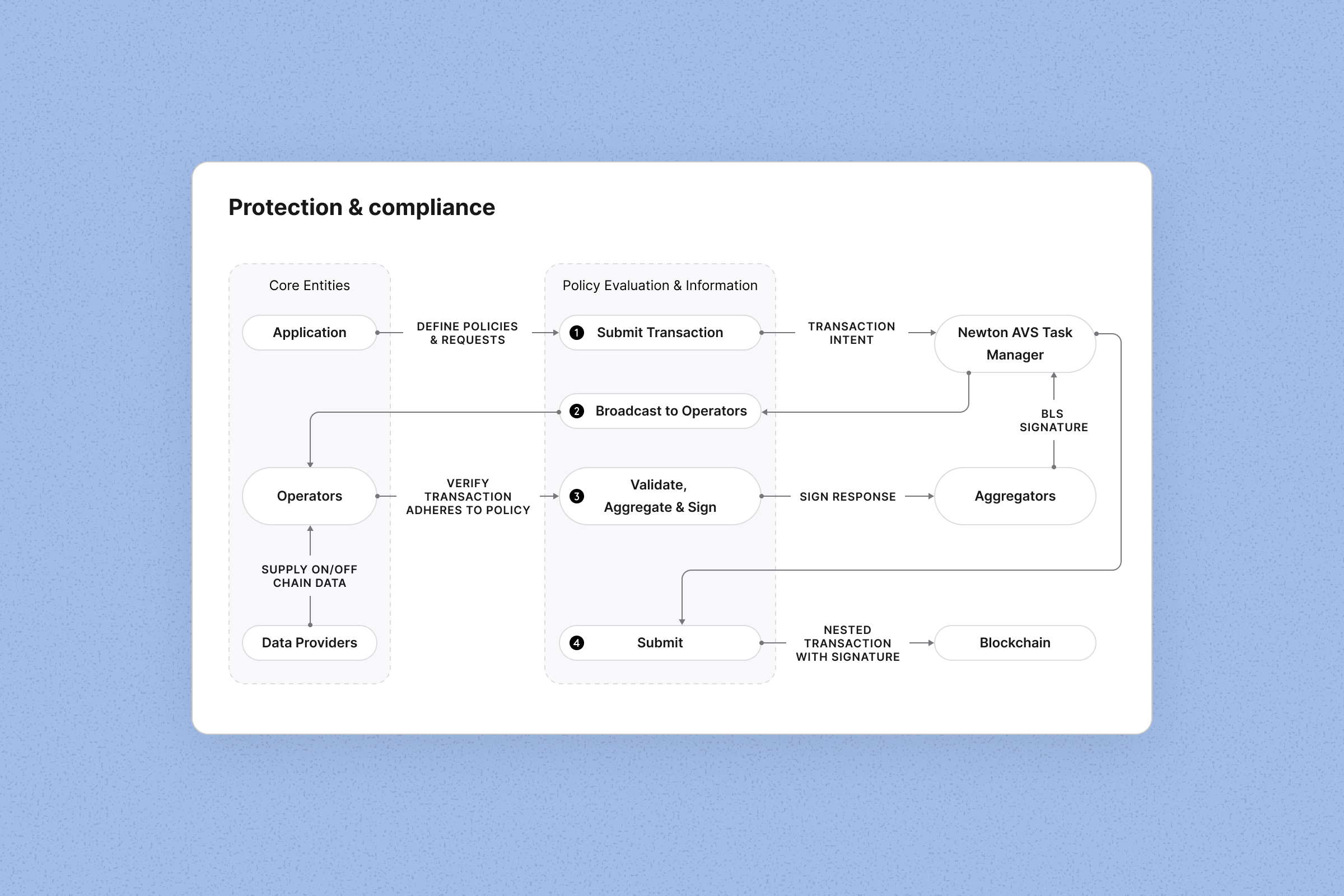
How the AVS evaluates and signs each transaction before settlement.
Book a call and our team will help you get your first vault policy live.