
01
Prompts aren't permissions
What an agent should do lives in natural language; what it can do has to be enforced at the transaction.
Solutions / Agentic Finance
AI agent guardrails, enforced at the transaction: Newton checks an agent's spending limits, approved payees, and mandate before each transaction settles. Verified onchain, not left to the prompt.

Why enforcement
Autonomous agents move real funds. A bad prompt, a bad plan, or a hijacked instruction becomes a real transaction.
01
What an agent should do lives in natural language; what it can do has to be enforced at the transaction.

02
Prompt injection or a hijacked mandate can drain funds before a human notices.

03
To let agents transact, teams need hard caps and an auditable record of every action.
What Newton enforces
Enforced on every transaction before it settles, regardless of what the agent was told to do. Start from a template or write your own in Rego.

Spending caps
Spending caps
Limit how much an agent can move per transaction, window, or mandate.

Approved payees
Approved payees
Restrict transfers to an allowlist of vetted recipients.

Mandate enforcement
Mandate enforcement
Bind each transaction to the agent's authorized mandate and reject anything outside it.

Prompt-injection defense
Prompt-injection defense
Block transactions that violate policy no matter what the agent was instructed to do.
How it works
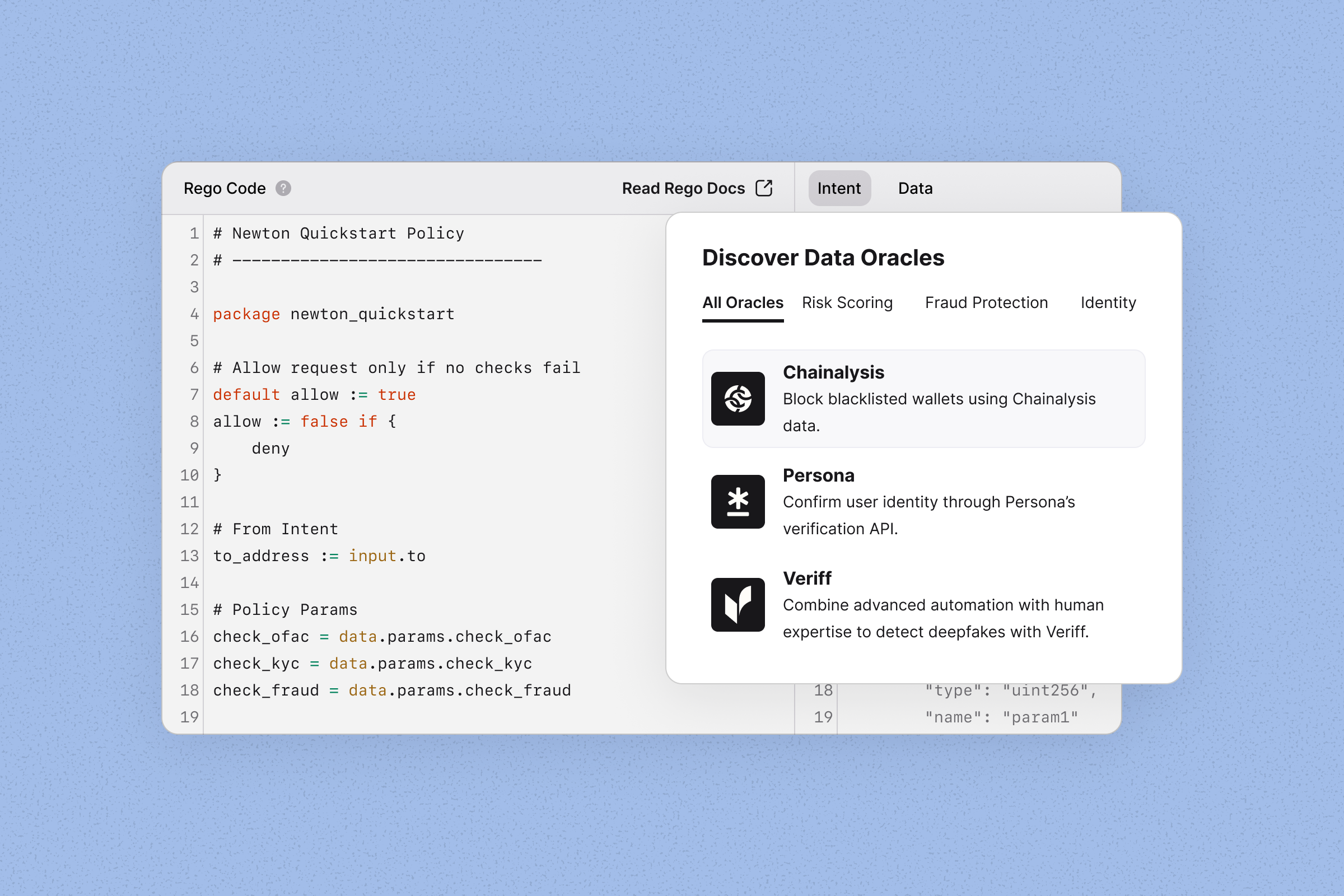
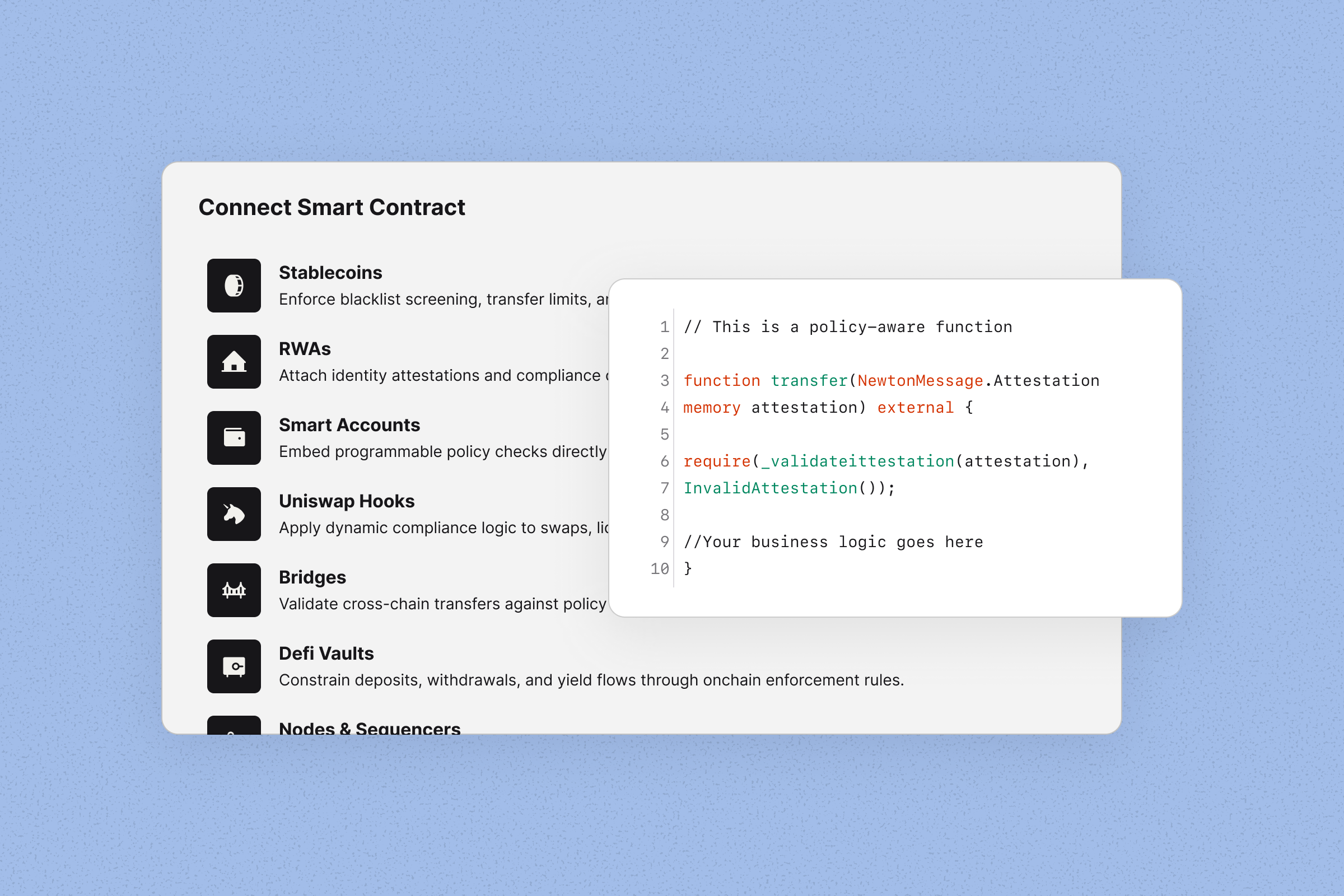
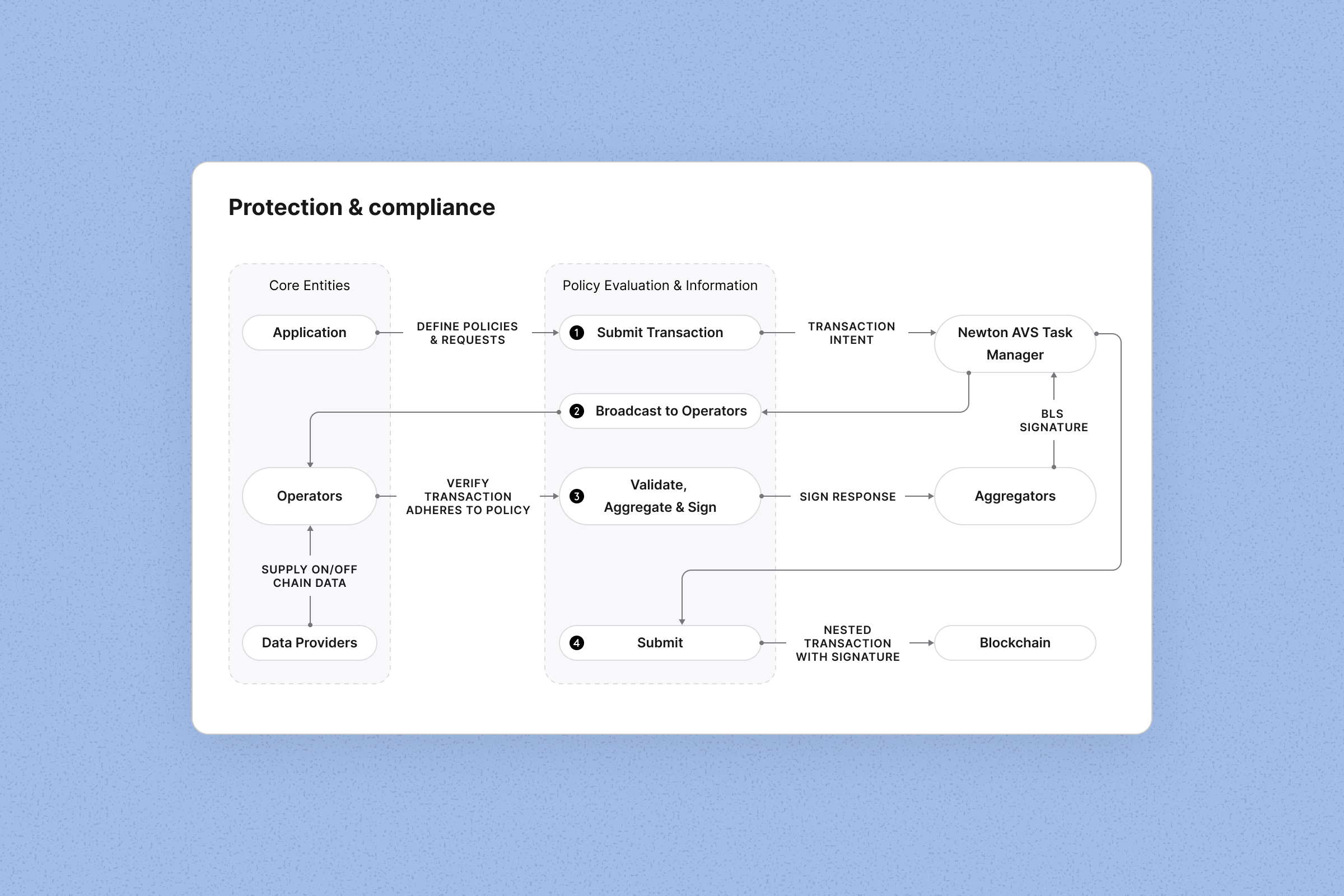
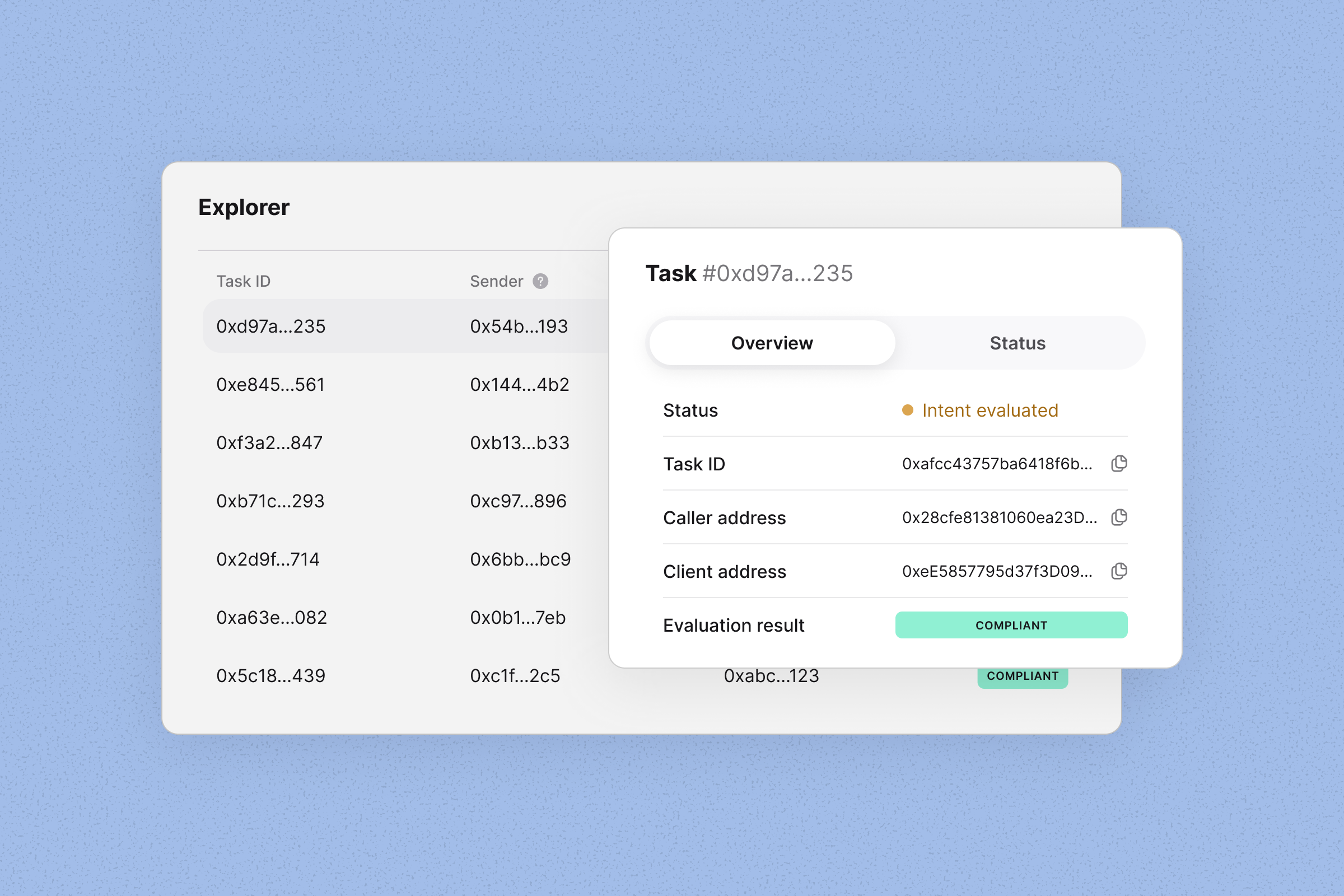
1. Write or select a policy
Start from an agent policy template or write your own in Rego: spending caps, payee allowlists, mandate scope.
Agent Authorization
AI agent guardrails are hard limits on what an autonomous agent can do with funds: how much it can spend, who it can pay, and what its mandate allows. Newton enforces these at the transaction layer, before settlement, so the limits hold regardless of the agent's instructions, and every action leaves a verifiable onchain record.
FAQ
The transaction still has to pass policy. Spending caps, payee allowlists, and mandate checks are enforced at settlement, outside the agent's context, so an injected instruction cannot authorize a transfer the policy forbids.
No. Route the agent's transactions through Newton with a lightweight snippet. The agent's code and prompts stay as they are; the limits live at the transaction layer.
Every transaction an agent attempts produces a signed onchain receipt showing what was attempted, which policy evaluated it, and why it was allowed or blocked, verifiable on the Newton Explorer.
Policies are expressive: they can combine spending windows, counterparty rules, mandate scope, and offchain data in one evaluation, and they update without rotating keys or redeploying, with every policy version attested onchain.
Go deeper
Guide
Setting hard limits and an audit trail for agents that move funds.
Docs
Templates, the routing snippet, and the mandate signals available to agent policies.
Protocol
How the AVS evaluates and signs each transaction before settlement.
Book a call and our team will help you get your first agent policy live.